
Clinical approach
Acne Scars
How I think about acne scars, what I do clinically, and what patients can expect.
Recent invited talks on acne scars and fat grafting
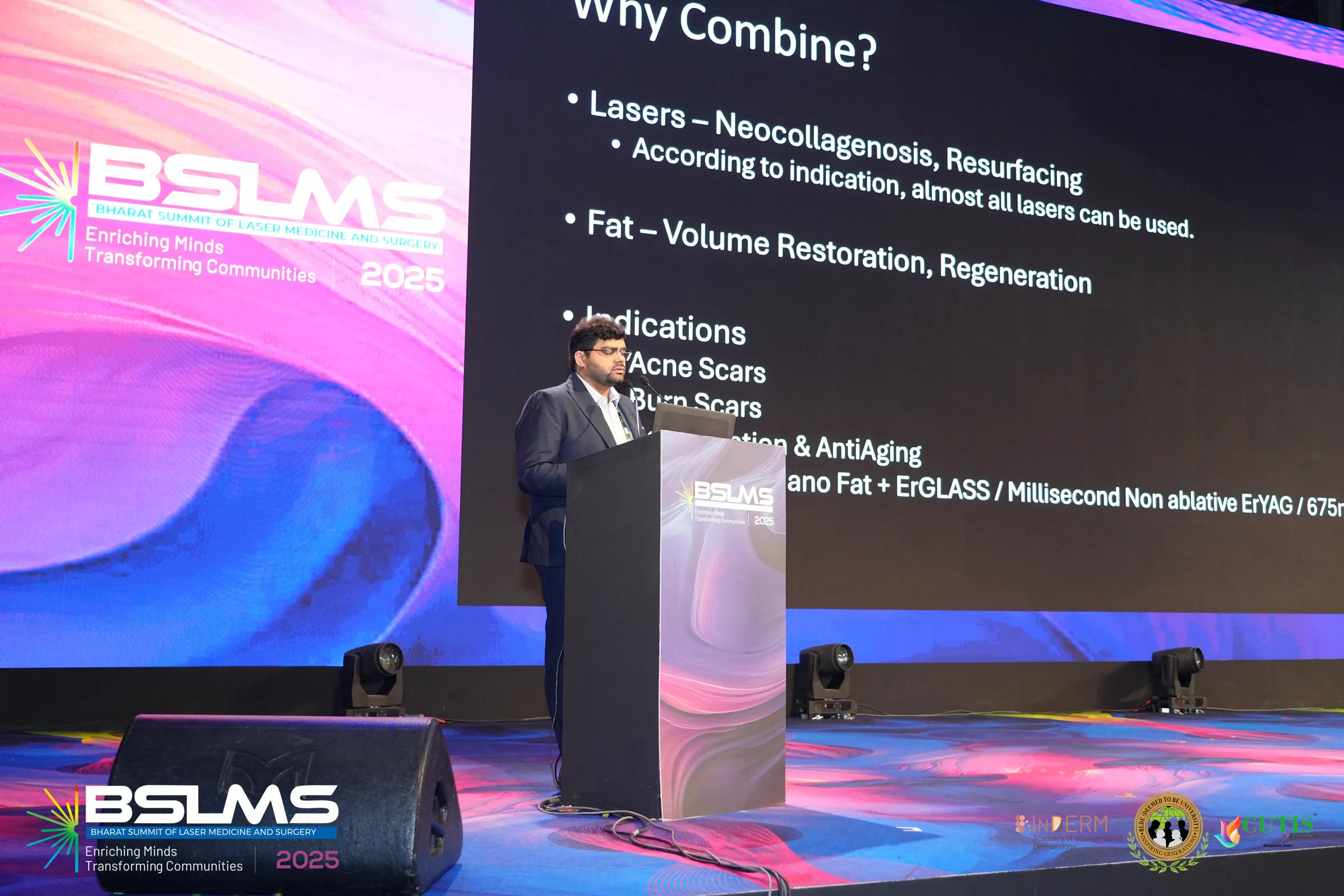
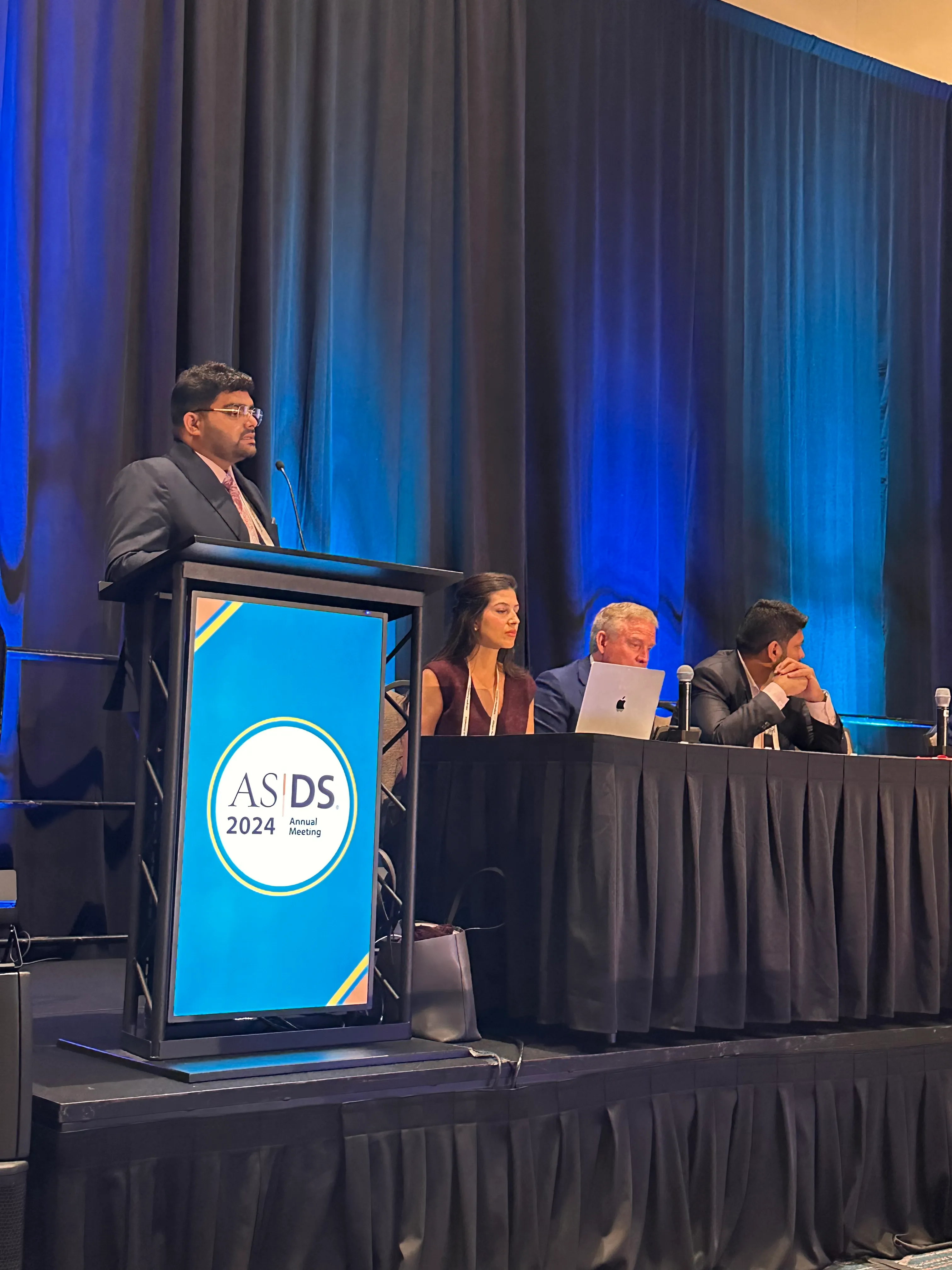
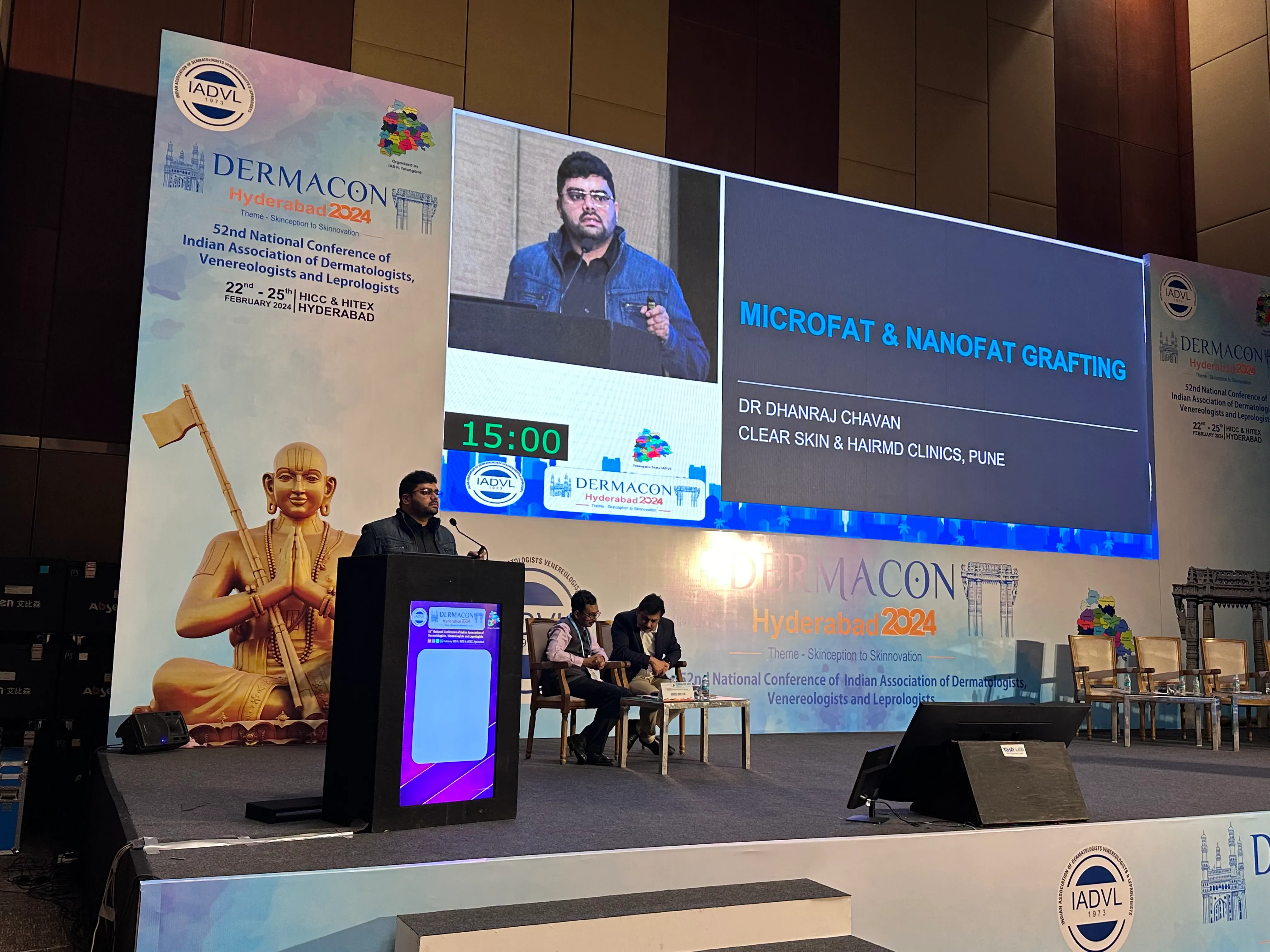
Acne scars are roughly 80–90% of Dr Dhanraj D Chavan’s current clinical work. The plan he uses is a layered combination of release, volume restoration, resurfacing, and collagen stimulation — calibrated for Indian skin and built around the limits of what off-the-shelf international protocols translate to Fitzpatrick IV–VI.
The rest of this page is in his own words.
How I think about the problem
Most patients who come to me for acne scars have been treated before — usually with one or two modalities tried in isolation. That’s where the framing usually goes wrong. Acne scars aren’t only depressions. The skin around the scars is also affected — there’s uneven thickening that sits next to the atrophy. So the surface looks worse than the depressions alone account for. Treating only the lows leaves the highs untouched.
That observation drives almost everything else in the plan. A complete approach has to do four things in some order — release the scars from below, restore volume where the tissue has bottomed out, pare down the raised tissue and smooth the borders of boxcar scars, and stimulate new collagen at depth. No single modality does all four. Combinations and sequencing are where the actual work is — which is the part most clinical practice still skips.
How I assess a new patient
The first axis isn’t the scar — it’s the patient. Two questions decide what kind of plan is realistic:
- What’s their expectation in terms of timeline? How fast do they want to see change?
- What’s their tolerance for downtime? How much post-procedure healing — redness, pigmentation shifts, looking different for a few weeks — can they actually live with?
A patient who can take a few months of visible recovery for a substantially better result gets one plan. A patient who can’t gets a milder plan with milder expectations. There’s no point pushing aggressive work on someone who’ll abandon it halfway.
After that, the scar assessment itself sits on three legs:
- Depth. Epidermis only, full dermis, or extending into the subcutaneous fat. I read this with palpation, side lighting, and asking the patient to animate the face. Under the fingers, the difference is unmistakable: when there’s no fat below, the area sinks; when there’s fat, it feels chubby. That tells me whether subcutaneous volume loss is in play and whether fat grafting needs to be on the table.
- Morphology. Boxcar, rolling, ice pick. Sharpness of borders, degree of atrophy.
- Surrounding irregularity. The thickening alongside the depressions that I described above. This is what most plans ignore.
Skin type isn’t a primary axis at the consultation because the population is uniform — most of my patients are Fitzpatrick type IV or V. It still drives parameter calibration on every aggressive procedure, but it doesn’t change the framing.
Photographs at every visit — standard angles and a side-lit shadow view, taken the same way each time. Without them, neither the patient nor I can assess change reliably.
The modalities, and what each one is for
I work with five families of techniques. Each does something different; the combination is the point.
- Release. The Taylor Liberator subcutaneously and needle subcision intradermally, usually together in the same sitting. The Liberator is a semi-sharp boomerang-shaped device — it breaks tougher adhesions that a blunt cannula would just slide around. I learnt the technique watching Dr Mark Taylor’s videos and later visited him in person to calibrate. Punch excision goes alongside it for the deepest scars.
- Volume restoration. Fat grafting. I use it more often intradermally — as a spacer that keeps the released plane open while it heals, and as a biological signal that supports new collagen formation in the dermis — than only as subcutaneous filling. When fat isn’t an option, plasma gel biofiller is a workable alternative. My fat-grafting training was with Dr Mario Goisis in Milan.
- Resurfacing and paring down. Full ablation with two ablative platforms — the Lumenis UltraPulse CO₂ laser and the Fotona SP Dynamis Er:YAG — chosen per patient based on skin type, scar profile, and target depth. This is the change in my practice that’s mattered most over the last two years. It’s distinct from fractional CO₂ — fractional treats a small percentage of the surface for deep collagen stimulation; full ablation treats the entire surface to selectively reduce the raised tissue alongside scars and smooth out the sharp borders of boxcar scars. The technique came through a fellowship with Dr Asif Hussain in London in 2024.
- Collagen stimulation. Fractional ablative work (CO2 or erbium glass) and microneedling radiofrequency (MNRF). These run alongside the major sessions and into the maintenance phase.
- Sequencing. The part that doesn’t appear on a device list but matters most. The order in which these are layered, the intervals between them, and which combinations go in the same sitting are the clinical judgement built across patient volume.
Calibrating for Indian skin
Indian skin (Fitzpatrick IV–VI) doesn’t tolerate aggressive procedures the way lighter skin does. Pigmentation risk, healing time, and post-inflammatory hyperpigmentation all behave differently. Most international training implicitly assumes parameters that don’t transfer.
The adaptation I’ve worked out, particularly for full ablation, is to reduce the area treated — not the energy. I treat scarred zones in a targeted way rather than full-face high-density. The trade-off is that colour match across the whole face takes a little longer to even out. The benefit is a much shorter and safer healing window. I’ll take that trade every time.
In parallel with the procedure work, I run a structured pigmentation management plan — staged across the inflammatory window after each session, with adjustments depending on how the skin responds.
What a typical course looks like
For a patient who wants meaningful improvement and can tolerate the downtime, the plan is roughly:
- A small number of surgeon-led sessions — done by me personally — that front-load the structural work over a few months: release, volume, full ablation.
- Lighter maintenance sessions that follow over the next several months, handed off to the in-clinic dermatology team. These drive ongoing collagen neogenesis without adding to the major-session healing burden.
Patients usually start to see meaningful change on photographs after the second major session. The volumetric effect of fat grafting matures over the months that follow.
I don’t promise an absolute endpoint. I tell patients: if we do everything I’m suggesting, you can expect somewhere in the 30 to 60–70% improvement range. If you opt out of parts of the plan, that range shifts down to roughly 20 to 40–50%. Where exactly any individual lands depends on how their skin responds and how much new collagen forms. That conversation happens at consultation — not at the end.
Who isn’t a candidate
Almost everyone is a candidate, in the sense that there’s some version of the plan for almost any presentation. The filter is on expectations and downtime, not on skin findings.
- Patients with unrealistic expectations get scaled down or turned away.
- Patients who can’t accept a few months of visible recovery get the milder track — fractional, MNRF, intradermal subcision — with the lower expectation band.
- Patients with active inflammatory acne don’t get scar work yet. The acne is settled first, usually over one to two months, then we begin.
What’s different about my approach
The standard playbook in Indian dermatology is MNRF and fractional CO2, sometimes with subcision. That plan helps, but it leaves a lot on the table — the surrounding thickening, the deeper structural work, the volume restoration. Most of the patients who reach me have been through that plan and aren’t satisfied with where it left them.
What I think is different is the integration: bilevel release combined with intradermal microfat as both spacer and biological signal, full ablation calibrated for Indian skin, and the sequencing that ties it together across surgeon-led and team-led sessions. None of the individual pieces are mine — Taylor, Hussain, and Goisis are the lineage. The combination, and the calibration to the patients I see daily, is what’s been built in clinic.